

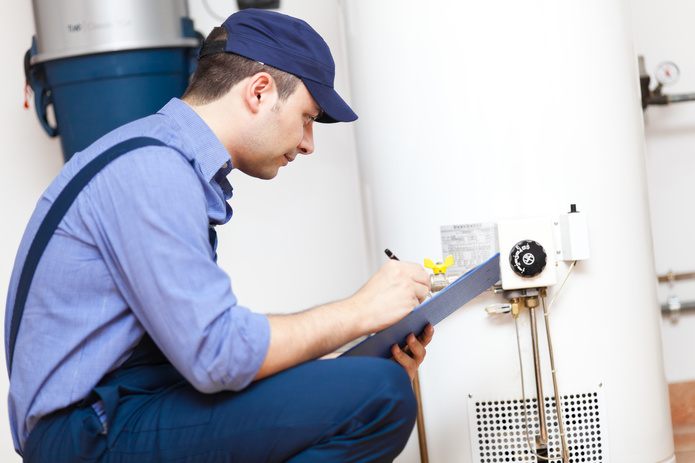
We depend on hot water for many of our daily activities; washing dishes and clothes, taking showers and baths, your water heater supplies all of it. However, water heaters don’t last forever and if there’s a problem, you might find yourself without hot water. Regular water heater maintenance is essential to help prevent breakdowns from occurring suddenly. Keep an eye out for these 6 common water heater issues to keep hot water running through your home.
1. Lack of Hot Water
If you’re noticing lower water temperatures or you’re finding that the hot water runs out before you’re done with your shower, this could just mean that your usage of hot water has increased and your family needs a larger water heater.
However, cold or lukewarm water could be signs of trouble with the heating element, thermostat, and more costly items. So scheduling an inspection at your earliest convenience is recommended.
2. Water Leakage
If you notice your heater is leaking water from the top, ensure that the connections for the inlet and outlet valves are tightly closed. Other causes for leaks could be built up condensation, corrosion or pressure build-up in the tank. If you see the tank is leaking, call a professional immediately to prevent bigger problems. No one wants needless home repairs due to expensive water damages.
3. Weird Sounds or Rusty Water
If the water leaking out of your heater is discolored yet the outside of the tank appears okay, this means there’s a deposit build-up, such as copper, iron or other minerals, on the inside of your tank or the anode rod has begun to rust. This rod is important because it stops rust from building up in your tank. When discolored water begins to leak, you’ll likely also hear banging, popping, or knocking sounds.
Get the anode rod replaced and the tank drained. If this doesn’t help, unfortunately, you’ll need to purchase a new water heater.
4. Noticeable Damage
Inspect your water heater’s body for damage. Even a top quality water heater will corrode and rust after using it for several years. Be sure to also check for deterioration and rust on the water inlet and outlet, temperature and pressure valves, and the wall behind your water heater.
Small spots of rust can usually be fixed with minimal work. However, if there’s substantial corrosion, you’ll likely need a new water heater.
5. Your Water Heater’s Undrainable
To increase the life of your water heater, it’s important to drain it once a year. Doing so will help dislodge any built-up deposits inside your tank. However, if water doesn’t drain out easily, the sediments have likely sunk to the tank’s bottom and your tank could be damaged or the drain valve is clogged.
Proper maintenance of your water heater is essential for its long life—not to mention it’ll save on electricity bills too! If you notice any issues with your water heater, contact us at Brian Wear Plumbing today!


