



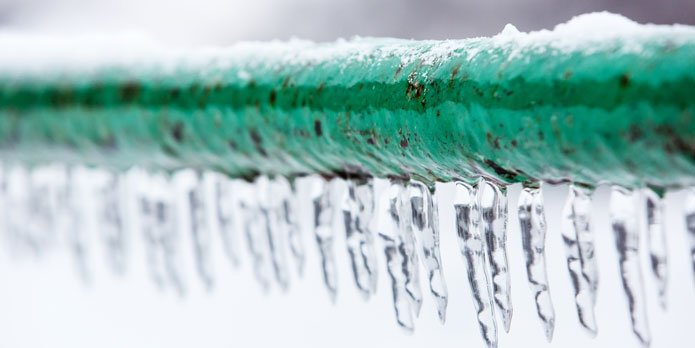
Winter is here, and temperatures are rapidly dropping. The cold weather brings snow, ice, and the threat of frozen pipes. For homeowners, frozen pipes can be a real pain in the wallet. It’s important to conduct routine maintenance to ensure that your pipes aren’t at risk of freezing this winter.
What Happens When Pipes Freeze?
When your pipes freeze, it can cause two major problems.
- No running water – This is fairly obvious; ice does not run. A lack of running water can impair your or your tenant’s ability to perform everyday tasks like laundry, showering, washing dishes, and more.
- Burst pipes – This is far more expensive. When water freezes, it expands. When this expansion occurs inside of a pipe, it can physically bust or block water flow, increasing pressure throughout your entire plumbing system. The increased pressure can cause pipes to burst, resulting in expensive repairs from problems like water damage, mold, and moisture build-up.
Why Do Pipes Freeze?
When the temperature outside falls to 32 degrees Fahrenheit or below, your pipes may be in danger of freezing. Improperly insulated pipes are especially at risk in cold weather. The location of certain pipes also makes them more susceptible to freezing than other pipes in your home. Pipes are more at risk of freezing if:
- They are in unheated areas of your home like an attic, crawl space, or garage
- They are in exterior walls
- You have plumbing on the outside of the house (like garden hoses connected to spigots)
Signs of Frozen Pipes
There are telltale symptoms when pipes freeze. Some symptoms of frozen pipes are:
- No water coming out of faucet
- Frost on pipes that are visible
- A strange odor coming from your drain
How to Prevent Pipes from Freezing
Taking steps to prevent pipes from freezing is far less expensive than repairing damages caused by burst pipes. The preventative measures you need to take depend on the climate you live in.
In moderate climates, you can prevent frozen pipes by:
- Wrapping foam pipe insulation around at-risk pipes
- Removing, draining, and storing unused outdoor hoses inside
- Setting your furnace no lower than 55 degrees Fahrenheit
In very cold climates, you may need to:
- Wrap thermostatically controlled heat tape around at-risk pipes
- Drain your hot water heater
- Use nontoxic antifreeze in traps and drains only if directed
What to Do If Your Pipes Freeze
Depending on the location of the frozen pipe, you may be able to thaw the pipe before it bursts. For example, if the pipe is under a kitchen or bathroom sink, you can often use a hairdryer to gradually thaw the pipe with relative ease. Other pipes are harder to access, however, and may require more extensive work to treat. An improperly thawed pipe has its own set of consequences, so it’s important to call a licensed plumber if you are unsure of what to do.
A Licensed Professional Plumber Can Help
Whether you need help conducting routine maintenance to prevent pipes from freezing, need help to thaw a frozen pipe, or you’ve had a pipe burst, we can help! We provide 24/7 emergency services to the Columbia and mid-Missouri areas. Contact us today for details.


