



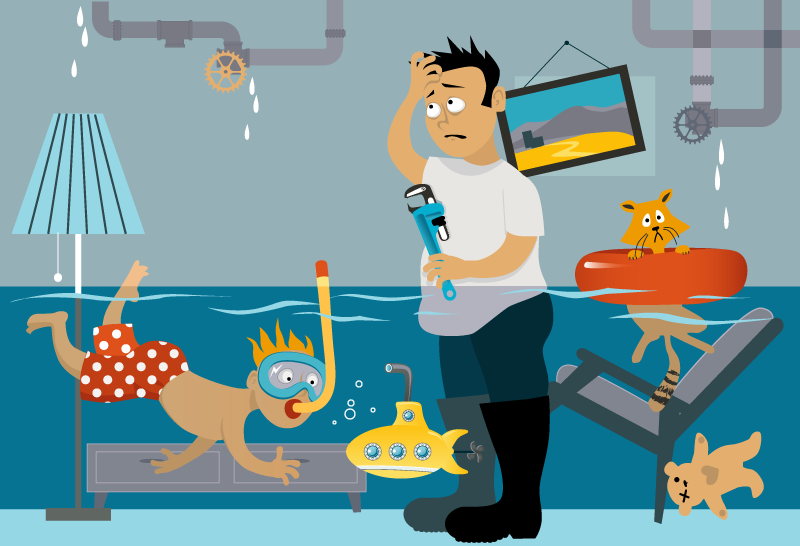
Say you are sleeping soundly in the middle of the winter, you’re nice and warm in your bed and suddenly you hear a loud pop. Maybe you would get up and investigate, and say you don’t find anything right away. However, when you wake up the next morning your basement is half-full of water or you have a neat little waterfall rushing down your stairs. Do you know what to do? Most homeowners have no idea.
Turn Off the Main Water Valve
Before anything else, before even picking up the phone to call for help, you need to stop the water damage from getting any worse. While some pipes may have specific shut off valves, it is best to just be safe and shut off the main water valve. Unfortunately, too many people have no idea where that is either. It varies from house to house. With houses that feature basements, it is typically located near the front foundation wall or, like in many other non-basement houses, by the water heater or furnace. Some house designs may also have it conveniently located right under the kitchen sink.
A well prepared household will already have the proper tools needed to turn off the main water valve stored nearby. Nothing is more frustrating than scrambling for a flashlight or digging through junk drawers for the shut-off key.
Turn on Taps or Collect Water
Now it is time to stop any more damage from occurring. Shutting off your water main will stop any new water from entering your pipes, but there is still some residual water left inside that needs to be drained. It will either drain out through the plumbing issue, something that can potentially be helped by draining it into a bucket, but there is a faster way – Turn on your taps.
If you need to get the water out of your pipes fast so that it doesn’t drain somewhere harmful, turn on your taps to help get as much water out as quickly as possible.
Take Electrical Precautions
Never touch any wiring that might have been affected by a plumbing leak. If your electrical wiring can be a bit spotty, it might be safest just to turn off the electricity in that area of the house.
Call for Help!
After you have prevented as much damage as possible and taken the proper safety precautions, now it is time to find out what happened and how to fix it. A plumbing emergency isn’t a good time to try your hand at DIY, so it is best to call a plumber right away. A professional can usually mean the difference between having the water off for a few hours to following emergency bathroom procedures for a few days.
If you live in the Columbia, Missouri area, be prepared! Contact Brian Wear Plumbing and allow us to do a general check next time we are there for any possible problems we can solve before this happens.


