

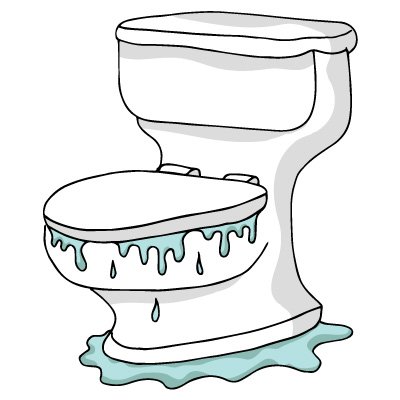
It’s bad enough when a toilet is sluggish or perhaps clearly plugged, but when the bowl is running over with water and worse, it is unpleasant to say the least. Fortunately, with a little quick thinking on your part and by using the tips listed below, you can stop the flow of water, get your toilet unplugged and begin the process of cleaning up the mess.
Do’s
- The first step when your toilet overflows is to stop the flow of water coming into the tank. Most toilets have a valve below and near the back of the toilet. Turn this valve clockwise to stop the water flow.
- Next take the tank cover off and lift the float ball high enough so the water stops running.
- Remove at least some of the waste water from the bowl and place it in an old bucket. You want to remove enough of the water so there will be minimal splashing when trying to remove the clog. After the toilet is working properly, you can pour the contents of the bucket back into the toilet bowl and flush. If you know your toilet is filled with simple toilet paper and waste material, proceed to step 3. If you suspect someone in the home placed a small object or toy down the toilet, proceed to step 4.
- Ideally, use a plunger made especially for toilets. Toilet plungers have a rubber cup on the bottom of the plunger in order to make a snug fit in the toilet hole. Plunge slowly at first, gradually increasing the intensity. Hopefully, at this point the water will begin to drain and your toilet is unplugged. If not, then proceed to step 4.
- Sometimes a clog is particularly stubborn or perhaps a small child tried to flush a small object or toy. In these cases, you can try using a toilet auger. Toilet augers are relatively inexpensive and most home improvement or hardware stores carry them. Place the end of the auger near the hole in the bowl and turn the auger handle to allow the end of the auger to snake down through the pipes. With any luck, the auger will fish out the unwanted object or break up the waste material to the point where it can move properly through the rest of the pipe.
- Don’t forget to re-adjust the float ball in the tank and turn the water valve back on when your toilet is unclogged.
Don’ts
- One thing you definitely don’t want to do when your toilet is overflowing is to continue to flush the toilet. You need complete assurance that your toilet is working properly before adding more water to the bowl.
- Using drain cleaners if your toilet is overflowing is not recommended. These are very caustic and can cause severe burns. You should never use a drain cleaner and then attempt to plunge a toilet.
Still have a stubborn clog? Contact us!


