


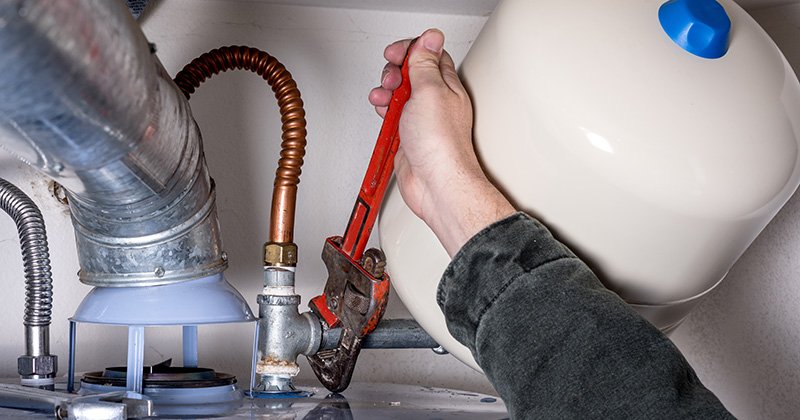
You can extend its life and keep it running in tip-top form by following a routine maintenance schedule that ensure it lasts at least until the end of its typical lifespan of 12-15 years — and maybe even beyond that! Here’s what you need to do:
Water Heater Maintenance Schedule
- Keep its thermostat adjusted to 120 degrees. Not only will this save you money, it’ll also eliminate the risk of being scalded every time you step into the shower.
- Maintain at least 2 feet of clearance around it (unless the manual states more or less).
- Drain about one-quarter of the tanks capacity at the start of every season to remove sediment and other accumulated debris. Here’s how to do it: Turn off the cold water supply and hook your garden hose up to the drain valve. Let the water run into a bucket (or two) until clear. If you find the water is still cloudy, briefly open up the water supply valve to stir up the sediment, then drain the remaining sediment. Doing this will keep it running more efficiently and quietly.
- Once a year, you should test the temperature pressure-relief valve by quickly discharging it a few times. After you do so, keep an eye on the valve to ensure you don’t spot any small leaks around it.
- Take a good look at your water heater’s sacrificial anode rod every three years by loosening the (hex head) screw and removing it. Replace it if more than 6 inches of the core steel wire is showing, if it’s coated with calcium deposits or if the rod itself is less than 1/2 inch thick. A replacement rod is inexpensive and easy to replace.
If you’ve got an older unit, it will run more efficiently if you insulate it with a fiberglass jacket. Insulating both the hot and cold water pipes is also helpful. Finally, to save money when you’ll be away from home for a few days or weeks, you can adjust the thermostat on a gas water heater by turning it to vacation mode. This will keep the pilot light lit without heating the water.
If your water heater has seen better days and needs evaluating, repairs or replacement, contact us at Brian Wear Plumbing. We’ve been serving the Columbia and mid-Missouri region for more than a decade, and we’ll treat your job like it was our own!


