



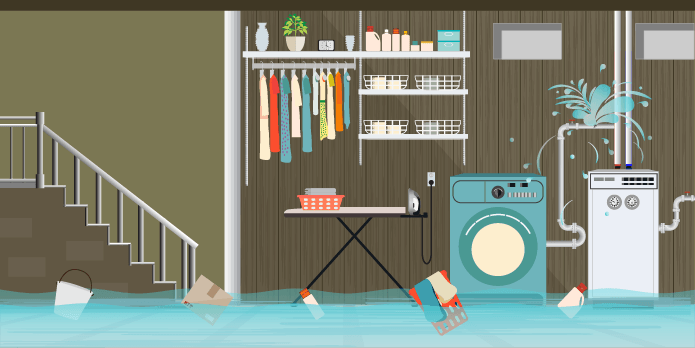
A flooded basement is a nasty surprise, but it doesn’t have to be catastrophic. Understand how floods happen to prevent them and learn to keep your cool if they happen to you.
Why do basements flood?
Basements are prime flood locations because of their proximity to underground water mains and because appliances like water heaters and washing machines are frequently placed there. Water can get in from the outside because basements are built with porous materials such as stone, concrete, and drywall. Most of the time this isn’t a problem, but if a water main breaks, all bets are off. A hot water heater or a washing machine failure can flood a basement from the inside.
Why is it important to remove the water immediately?
The longer the water stands in your basement, the more opportunity it has to seep into the walls and foundation and the worse your water damage will be. In severe cases, it can even lead to part of your home collapsing. The sooner you can remove the standing water, the better chance you have of saving your possessions, your furniture, and your foundation.
After the standing water has been removed, any water and moisture remaining in the walls and floor can give rise to toxic mold, mildew, and other health hazards. It’s important to get air circulating through as soon as possible to lessen this risk.
Any gas-fired appliances that have been under water need to be checked by a qualified HVAC technician to make sure they are safe to use and not corroded to the point of failure.
What to do if your basement floods
The first thing to do if your basement floods is to shut off the power to the area. Then find the source of the flooding–broken pipe, water heater, washing machine–and turn off the connection. If you can’t find a source, turn off your main water line, which will stop the influx from a broken water main.
To remove the water, a sump pump is your best bet. If you don’t have one, submersible pumps can usually be rented from hardware stores. If you can’t get hold of one, the old-fashioned, labor intensive bucket brigade approach will work. While the sump pump is running, make a few phone calls: first to the water department if there’s a broken water main, then to your insurer to report the damage.
If you’re comfortable with a DIY approach, you can fix the leak or broken pipe yourself. But if you’re not the handy type, no problem! Seek a professional plumber like Brian Wear Plumbing, and we’ll be there to help. We even offer 24-hour emergency service, so you won’t have to wait long.
Prevent future problems
There are a few easy ways to prevent plumbing-related basement floods.
- Wrap your water heater in insulation to prevent condensation on the tank, which could lead to rust and corrosion.
- Flush the heater every six months to clear sediment and debris.
- Install a sump pump if you don’t have one.
- Wrap your pipes in freezing weather, and check them regularly for leaks.
- Get in the habit of routine plumbing inspections to check for and prevent problems from growing worse
Brian Wear Plumbing has been serving the mid-Missouri area for nearly 15 years. We’re here to help with all your plumbing needs. Call or contact us for all your plumbing questions and needs!


