



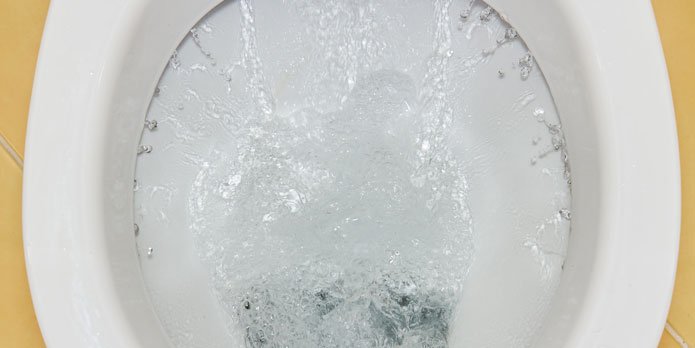
Under the rim of your toilet, rim jets send water from the tank swirling into the bowl to flush your toilet. They’re easy to forget about, but without them, your toilet couldn’t work. If the rim jets get clogged or blocked, water can’t get through and your toilet won’t flush correctly.
Regular scrubbing under the rim with a toilet brush is good basic maintenance, but it might not be enough, especially for a toilet that is old or doesn’t get much use. An early sign of clogged jets can be water flowing into the bowl straight down instead of at an angle. If the jets get significantly blocked, you’ll notice that your toilet doesn’t flush completely or takes a long time to do so.
When checking your rim jets, look for two things:
- Orange or black spots, which indicate bacteria.
- Light colored scale, which is mineral buildup. Mineral deposits are more common, particularly in areas with hard water.
Cleaning your rim jets is a pretty straightforward process: add the correct chemical to the overflow tube in the tank, let it sit a while, flush, and clean out the jets themselves. The details vary a bit depending on whether you have bacteria or mineral scale. If you have both, start with the one that seems to be worse and take care of the other another day.
For Bacteria
Use a solution of one part bleach to ten parts water. Let it sit about five minutes in the overflow tube, then flush the toilet. Then put on some gloves and use a piece of wire to clean out each jet. When all the jets are clean, scrub around them with a bleach-compatible cleaner. Add more bleach solution to the overflow tube and wait another five minutes before flushing again.
For Mineral Scale
Heat 1 to 1 ½ cups of white vinegar to about the same temperature you’d take your coffee – not scalding, but warm enough. Add it to the overflow tube and give it about 30 minutes to work. Flush, then go to work on the jet holes, chipping away the scale with something small but solid. Allen wrenches are good because you can increase the size as the holes clear out. Flush every so often to clear out debris until all the jets are clear.
Maintain Your Jets
If bacteria continue to build up, add one tablespoon of bleach to the overflow tube every so often. For persistent mineral deposits, you may want to add a water softener.
Keeping your rim jets clean and clear can keep your toilet working well throughout its lifespan. If you think you have a more serious problem or want a professional opinion, contact Brian Wear Plumbing today.


